Editorial
In Defense of Oversized: The Big Sunglass That Still Works
The huge shield is over. The classic Italian-house oversized — gold-accented, knowing, slightly architectural — never went anywhere. A photo essay.
April 30, 2026 · 6 min read
We declared extreme oversized done in our 2026 trend piece, and we stand by it. The huge black shield that took over Instagram between 2018 and 2022 is finished, the way trucker caps and chunky white sneakers were finished in their day. But oversized as a category isn’t one shape. There’s another oversized — the Italian-house, gold-accented, slightly architectural kind — and that one isn’t going anywhere. It hasn’t in sixty years.
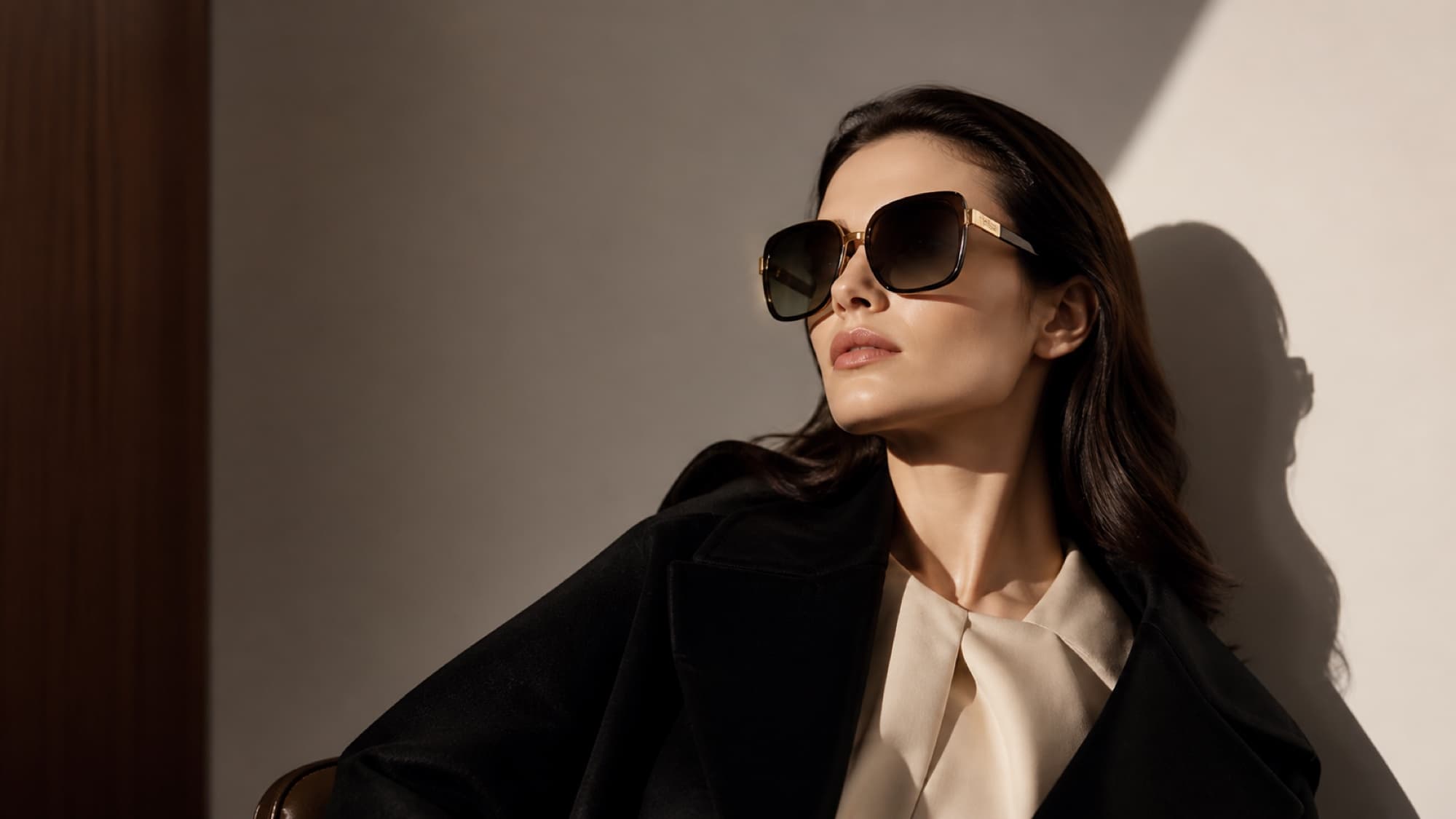
The frame in the photo above isn’t the trend that died. It’s the ancestor of it — the shape extreme oversized was a loud overcorrection of. Compare them carefully and the difference is obvious. The finished trend tried to cover as much face as possible. This shape is built around the face: the lens still ends at the brow, the frame still meets the cheekbone with intention rather than smothering it, the gold rim makes the geometry visible rather than hiding behind smoke.
That distinction — between covering and framing — is the entire argument for keeping oversized in your rotation. Worn well, an oversized frame is a kind of editorial choice: it lengthens the face, balances strong cheekbones, and reads romantic in a way most small frames simply can’t. Worn badly, it covers too much and flattens everything. The difference is geometry, not size.
Oversized is a posture, not a measurement.
The forgiving frame
One of the underrated facts about oversized sunglasses is how forgiving they are — to the wearer, to the photograph, to the morning. A small frame demands the rest of your face hold up its end of the composition. An oversized frame does most of the work itself. There’s a reason every off-duty paparazzi shot since 1968 features an oversized pair: it’s the most flattering item of clothing you can put on a face that hasn’t had coffee.
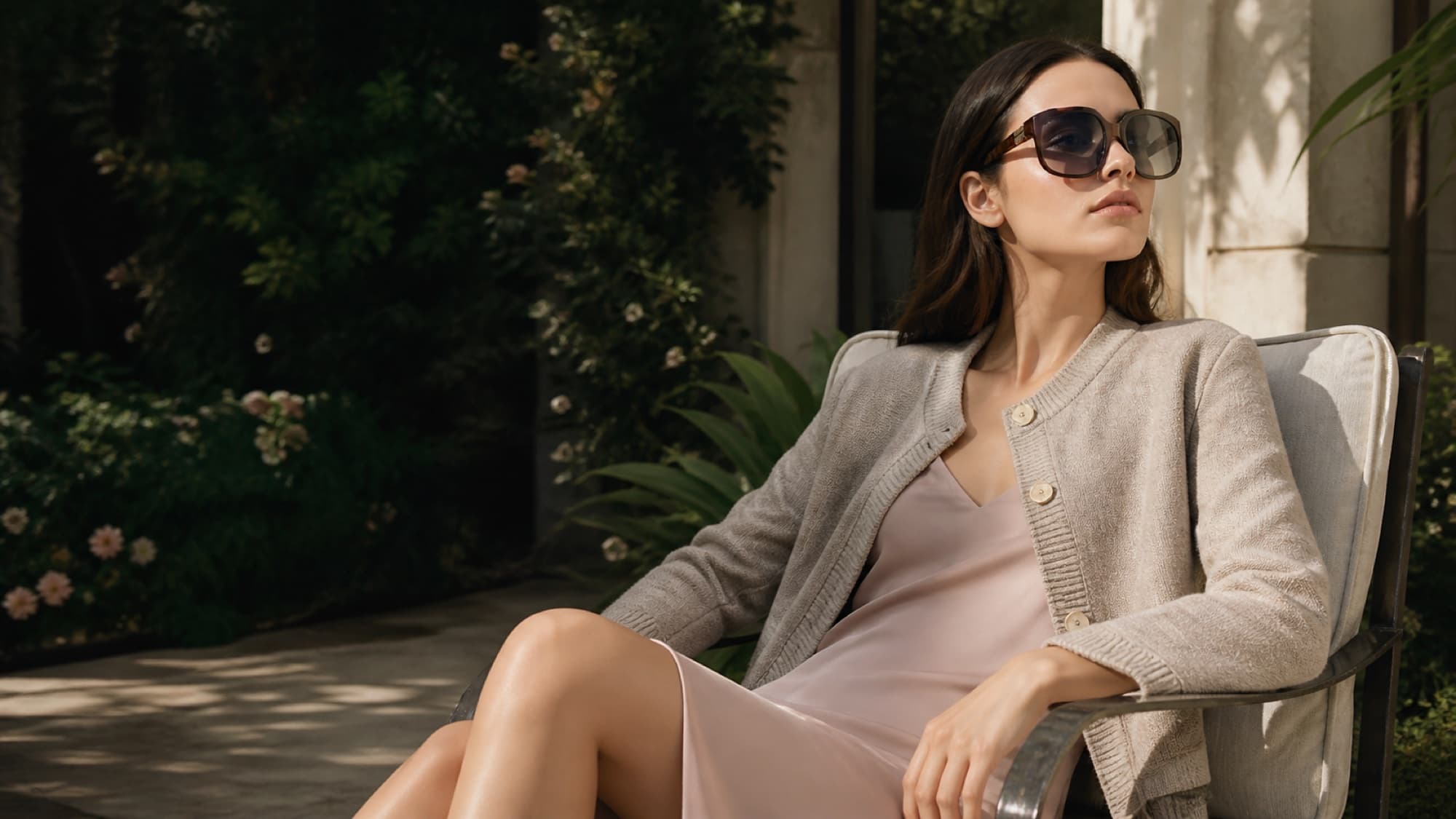
The garden photograph above is the same family of frame in a completely different register — softer styling, daylight, a cardigan, a slip dress, the whole thing relaxed. The frame holds the shot together. Without it the picture is a nice cardigan and a chair. With it, the picture is a person.
That’s the second underrated fact about oversized: they raise the register of whatever you’re wearing. A simple coat with oversized sunglasses reads sophisticated. A simple coat with small wire ovals reads thoughtful. Both are good. They’re different goods, and the small-frame revival has — for understandable reasons — spent the last few years pretending only one of them counts.
Who oversized still flatters
Honest version: oversized frames flatter long, oblong, and oval faces most readily. They flatter heart-shaped faces if the lower edge is heavier than the upper. They flatter square jaws when the corners are softened (rounded squares, not hard rectangles). They are hardest on round and very small faces, where the frame can eat the cheek and shrink everything else.
Skin tone matters more than people think. The classic oversized in tortoise honey or warm gold flatters warm complexions effortlessly. The same shape in pure black acetate suits cool complexions better. The all-purpose answer is a tortoise that leans neither extremely warm nor extremely cool — see our skin-tone guide for the longer version.

The third photograph is what oversized looks like when it leans feminine and warm — a cat-eye geometry rather than a square, a tortoise frame rather than black, a soft sweater rather than a dark coat. Same category, completely different mood. This is the oversized that suits the broadest range of faces: rounder lower edge, slight upsweep at the outer corners, mid-tone material that doesn’t fight skin.
The trend that died was a silhouette. The shape it killed was an impostor. The original is still working.
How to wear it now
A few rules, none of them strict:
Pick rounded over rectangular. The hard rectangular oversized — the one extreme-oversized was descended from — has aged worst. The rounded square, the soft cat-eye, and the elongated oval have aged best. They’ll keep aging well.
Visible material wins. The era of black on black on black peaked around 2020. Tortoise, honey, and gold-accented frames are the ones that read current and won’t date. Save matte black for when you specifically want anonymous.
Match weight to features. An oversized frame suits strong features (defined cheekbones, full lips, expressive brows). On a delicate face, it can feel like a costume. Either commit fully or scale down.
Lens tint matters more than you think. Gradient amber and warm brown lenses carry oversized geometry better than flat black. They also flatter most skin tones and photograph better in mixed light.
None of this is binding. The honest summary is the same as everywhere else in this blog: there are no universal rules, only a face and a frame and the question of whether one is wearing the other or being worn by it. Oversized is high-stakes — when it works, it’s the most flattering shape we have. When it doesn’t, you look like you borrowed glasses from someone else.
The case for trying before buying is, as ever, the case. Pair this with our face-shape guide to figure out which oversized geometry is the one for you.