Style
A Brief History of the 7 Frame Shapes That Define Style
Aviators, wayfarers, cat-eyes, and the rest. A century of choices someone else already made for you — and how to wear them now.
May 4, 2026 · 11 min read
A frame is a century of choices someone else already made for you. Every shape in your local optical shop has a designer, a year, and usually a war or a film attached to it. Knowing the story doesn’t make you wear the frame any better — but it tells you what it’s signalling, which is half the point of putting something on your face.
You don’t wear a Wayfarer. You wear 1952.
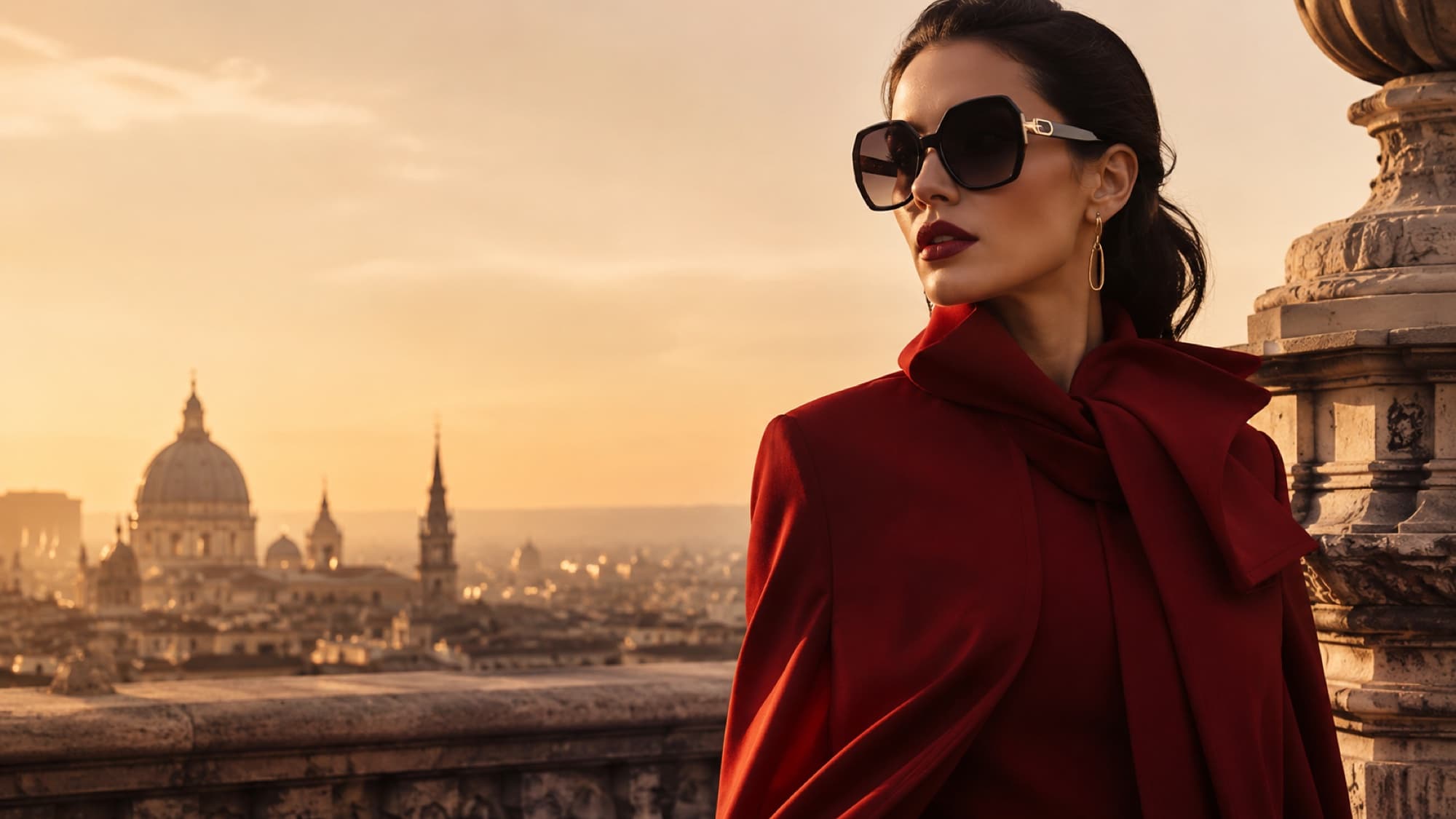
1. Aviator — 1936
Bausch & Lomb developed the original aviator for U.S. Army Air Corps pilots in the mid-1930s, replacing the bulky fur-lined goggles pilots had worn until then. The teardrop lens was engineered to cover the entire eye socket against high-altitude glare; the gold wire frame was light enough to wear under a leather flight cap. In 1937 the design was rebranded as Ray-Ban, from “ray banishing.”
It became civilian fashion the way a lot of military gear does — through photographs of generals (Douglas MacArthur in the Philippines, 1944), then through Hollywood. Top Gun in 1986 sold an estimated generation of them. The aviator’s teardrop is the single most flattering sunglass shape on a square jaw, which is why every Hollywood publicity still from 1976 to 1992 features one.
2. Wayfarer — 1952
Designed by Raymond Stegeman for Ray-Ban in 1952, the Wayfarer was the first mass-market sunglass made from injection-molded plastic rather than wire and acetate. The trapezoidal lens shape — wider at the top, narrower at the bottom — was made possible specifically by that manufacturing change. It was a midcentury industrial-design moment, and the shape is now so embedded in pop culture that most people read it as “sunglasses,” full stop.
Audrey Hepburn wore them in Breakfast at Tiffany’s (1961). Bob Dylan wore them through the entire 1960s. The shape collapsed in popularity in the 1970s and was rescued by an aggressive Ray-Ban product-placement deal that put them on Tom Cruise in Risky Business (1983) and Don Henley in the “Boys of Summer” video (1984). They have not gone out of style since.
3. Cat-Eye — 1931
The cat-eye was designed by Altina Schinasi, a New York window dresser who, in 1931, walked through Manhattan optical shops and decided every frame for women looked like the frame her grandmother wore. She sketched a shape based on a Harlequin mask — sharp upper corners, lifted outer edges — and pitched it to optical manufacturers, most of whom passed. The shape eventually shipped as the “Harlequin” frame and became the dominant women’s eyewear shape of the postwar period.
The cat-eye is the rare frame whose meaning has changed twice. In the 1950s it signaled glamour; in the 1960s it became sex-kitten shorthand (Lolita); in the 2010s vintage revival it became an editor’s frame, intellectual and severe. Worn now, in 2026, it reads as deliberately mid-century — which is to say, it works on anyone who wants their sunglasses to do a little narrative work.
4. Round (Windsor / P3 / Lennon) — 19th century
Round wire frames are the oldest shape on this list. They originated as medical and military spectacles in the late 1800s — the “Windsor” shape, manufactured by Algha Works in London from the 1890s and adopted as standard British military issue through both world wars. They were never designed to be fashionable. They became fashionable because the people who wore them refused to choose differently.
Mahatma Gandhi wore them. James Joyce wore them. The image we now call “Lennon glasses” is a 1967 photograph of John Lennon on the set of How I Won the War, in standard-issue British army wire frames. Round frames have a built-in costume — they signal intellect, dissent, or both. On the wrong face they look like a prop. On the right face they look like a personality.
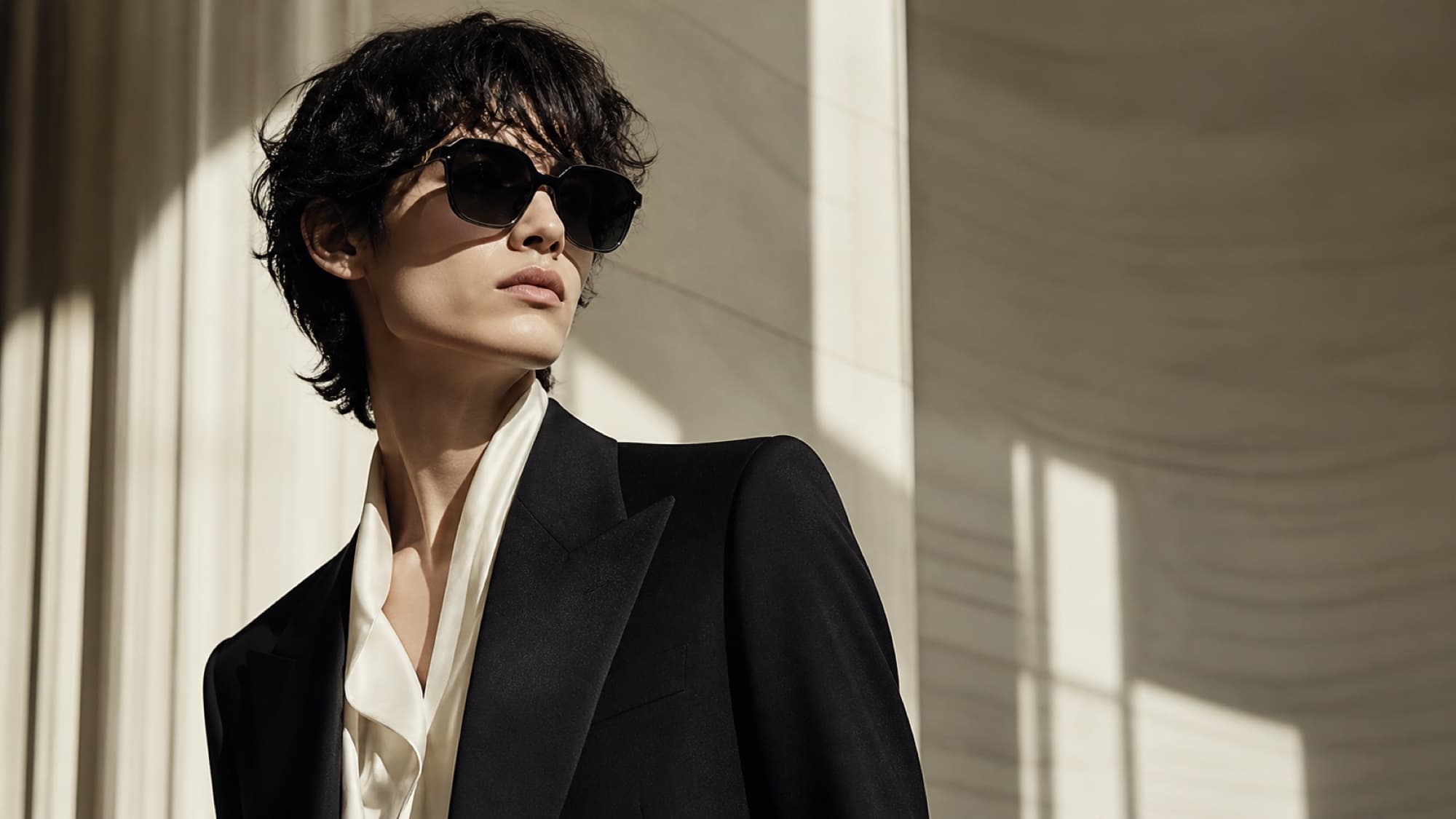
5. Browline — 1947
The Shuron Optical Company introduced the Ronsir browline frame in 1947 — the first “combination” frame, with a thick acetate or metal bar across the top suspending a thinner wire bottom. Browlines dominated postwar American eyewear; they were the everyman frame of the 1950s, worn by office workers, presidents, and athletes alike.
They picked up a more specific cultural weight when Malcolm X chose a black-rimmed browline as his signature frame, and again when Vince Lombardi wore his on the sidelines. The browline’s top-heavy profile flatters round and oblong faces, and reads — depending on decade and outfit — as anything from accountant to civil-rights leader to indie musician. It is the most context-dependent frame shape we have.
6. Oversized — 1960s
Oversized sunglasses are less a shape than a posture. The oversized cultural moment begins, more or less, with Jackie Kennedy in 1962 wearing wide round dark frames as a way of being looked at without being seen. Audrey Hepburn’s oversized round frames in How to Steal a Million (1966) cemented the silhouette; Italian houses (Persol, Gucci) commercialized it through the 1970s.
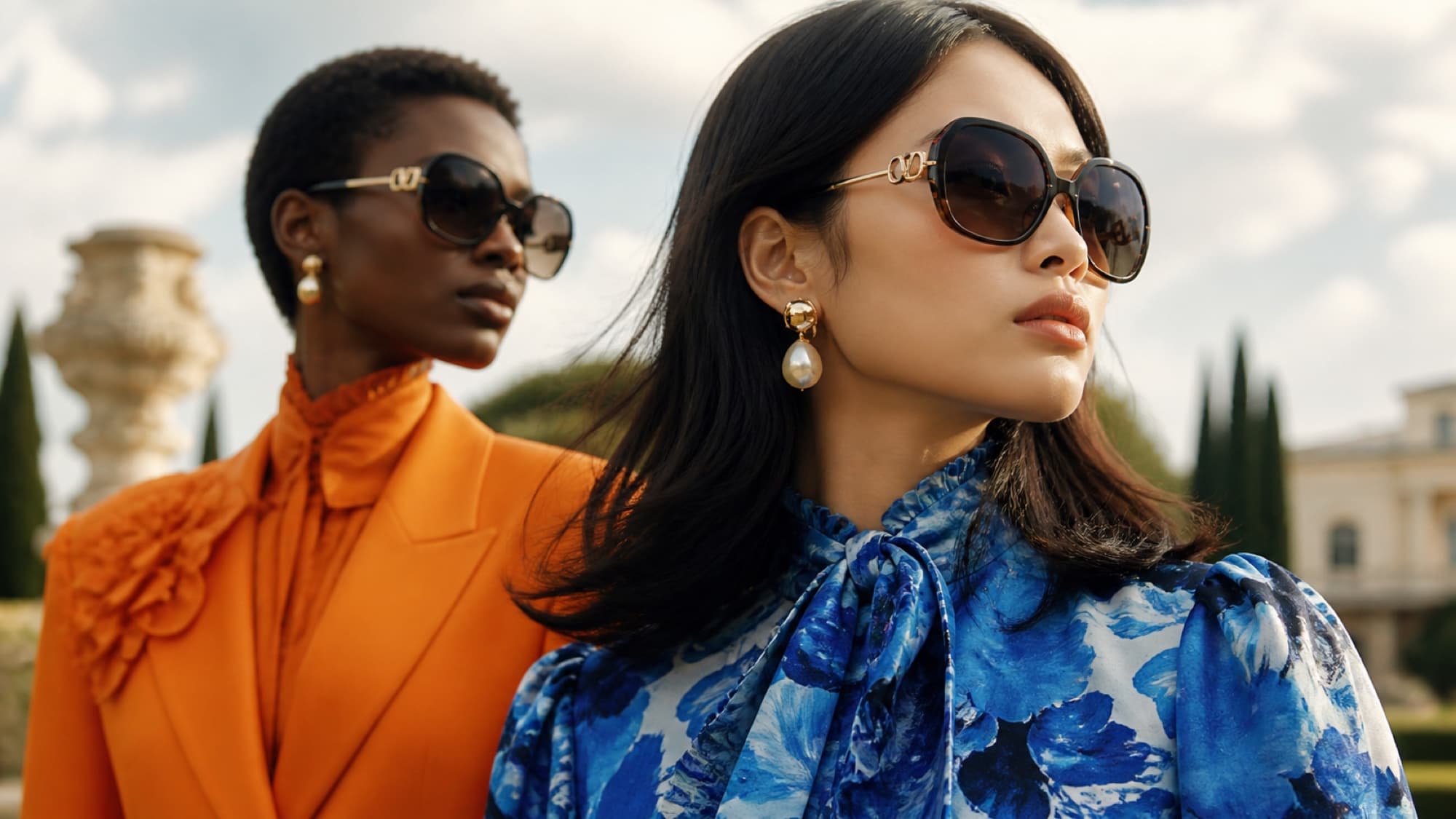
The shape’s function is to declare: do not photograph me; you will anyway. It is the frame of celebrities in airports, of widows at state funerals, of anyone who wants to make their face smaller than the situation. Oversized frames flatter long and oblong faces best, and they’re having a quieter moment now than they were five years ago — the trend has tilted back toward small. See our essay on the micro-frame revival.
7. Wraparound — 1980s
Wraparounds are the descendant of ski goggles and motorcycle eye protection. The shape became a fashion category in 1984 when Oakley released the Eyeshade — a single curved shield originally designed for cyclists — and again in 1989 with the M Frame, which became the defining wraparound silhouette of the 1990s. They were sport gear first, fashion second.
For about a decade in the late 1990s and early 2000s, wraparounds were the dominant performance frame in basically every action sport. They went out of fashion hard in the 2010s as a reaction to early-2000s aesthetics, and have come back in two waves: as intentional Y2K throwback (Balenciaga, Oakley collaborations from 2021 onward), and as functional sport gear. They’re the frame that most loudly tells you which decade you grew up in.
Every shape on this list flatters somebody. None of them flatter everybody.
How to pick from seven options
The honest answer is: you can’t, on paper. Aviators flatter most square jaws. Wayfarers flatter most ovals. Round frames flatter most squares. But within each category there are a dozen variants — slim wayfarers, deep wayfarers, mini aviators, oversized aviators — and small geometric differences make a real difference on your actual face. This is the case for trying frames on rather than deducing them.
For face-by-face recommendations, see our face-shape guide. For color and material decisions, the skin-tone guide is the other half of the answer.